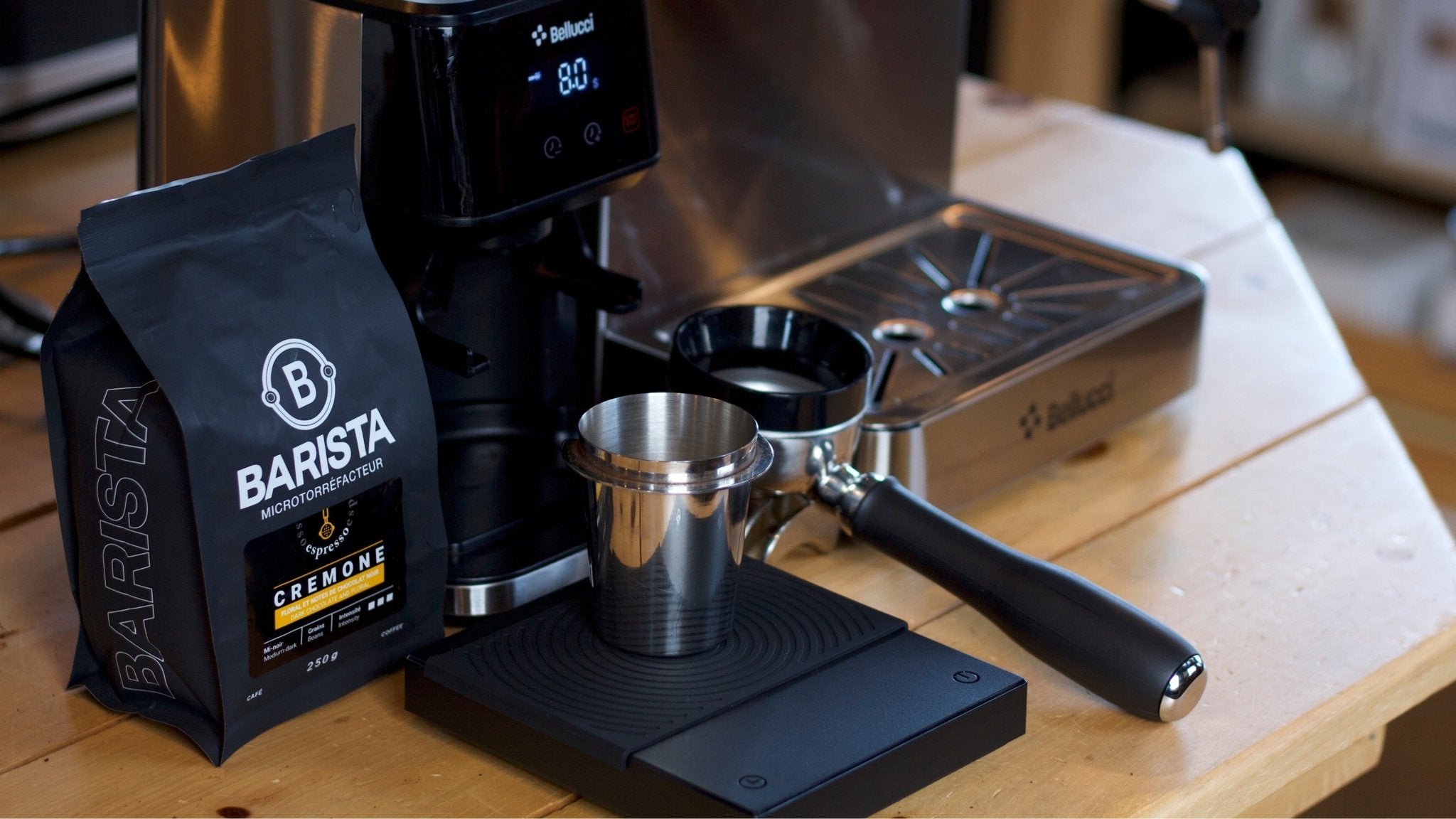
The coffee scale is an essential tool for preparing a precise and delicious espresso. Follow our practical tips and simple steps to use it properly at home in your coffee corner!
For coffee lovers, precision is the key to a perfectly balanced espresso. A coffee scale isn’t just a gadget — it’s an essential tool for controlling the amount of coffee and water, ensuring optimal extraction, and achieving a consistently great cup.
Why Use a Coffee Scale?
Using a coffee scale offers several advantages:
- Precision: Exact doses of coffee and water guarantee proper extraction.
- Consistency: Every espresso or filter coffee stays true to your preferences.
- Extraction control: Adjusting the coffee-to-water ratio and extraction time becomes simple and reliable.
- Savings: You use the right amount of coffee, avoiding waste.
How to Use a Coffee Scale for Espresso: Step-by-Step Guide
Step 1: Prepare Your Equipment
- Make sure your scale is clean and calibrated.
- Prepare your coffee grinder, espresso machine, and portafilter (and/or dosing cup).
Step 2: Dose the Coffee
- Place the empty portafilter (or dosing cup) on the scale and press tare to reset it to zero.
- Grind your coffee directly into the portafilter — about 18 to 20 g for a double espresso.
- Check that the dose matches your target weight on the scale.
Step 3: Extract the Espresso
- Place your cup under the portafilter.
- Press tare again to reset the scale to zero.
- Start the extraction and monitor the weight of the espresso as it flows to match your desired coffee-to-water ratio (e.g., 18 g of coffee for 36 g of extracted espresso). The final yield should be about double the initial weight of ground coffee.
Step 4: Adjust as Needed
- If the extraction is too fast or too slow, adjust your grind size or dose. The scale helps you test different ratios and achieve consistent espresso every time.
Practical Tips
- Choose a scale with a tare function and a built-in timer to simplify preparation.
- Clean the scale regularly to prevent coffee grounds from affecting measurements.
- Use your scale for all types of coffee: espresso, filter, and cold brew.
- Write down your ratios and results to reproduce your favorite coffees depending on the roast profile (light, medium, or dark).
Conclusion
A coffee scale transforms your coffee routine into a true precision experience. It not only ensures a perfectly measured espresso but also allows you to explore and experiment with different beans and recipes. Whether you’re a home barista or simply passionate about coffee, investing in a scale is a step toward more consistent, more flavorful, and even more satisfying coffee!