
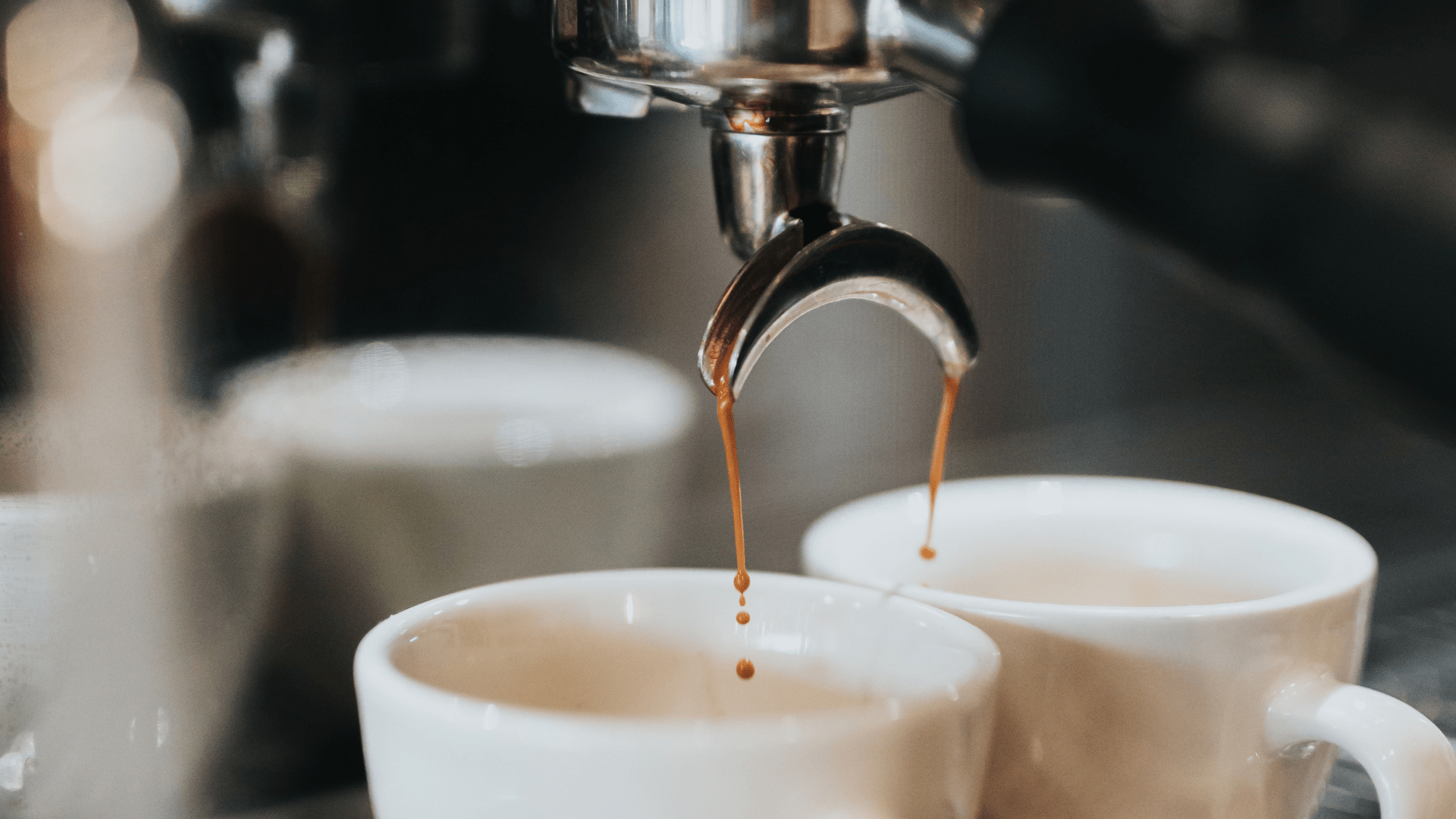
A long single espresso is one of the most basic coffee beverages. Its ingredients are simple, water and coffee, however making it can prove to be quite a complex endeavour, and requires precision and attention to detail.
History
The espresso first appeared in Italy towards the end of the 19th century. Coffee was already very popular in Europe at the time, and the espresso machine was invented to make coffee better and quicker. Though there may have been several prototypes that came before, it is Angelo Moriondo who is credited with the invention, and he received the first patent in Turin for it in 1884.
Espresso is a type of coffee extraction method. This means that pressurized hot water passes through the coffee to extract its oils. The result is a drink that is very concentrated and dense with a lower amount of caffeine. Furthermore, espresso is made up of two parts: the liquid and the crema. It is the base of most beverages listed on coffee shop menus.
How is Espresso Made?
When diving into espresso making in more detail, it becomes obvious that extracting so much flavour from such a delicate product, with such a violent method, is actually quite a feat.
First, coffee beans are ground very finely for an espresso. Then, the ground coffee is poured into the portafilter. The amount of coffee depends on what type of espresso is being made. It can be a single (7 to 9 g of coffee) or a double (14 to 18 g) and some people even make triple espressos.
Tamp the coffee in the filter and then insert it into the brew group. Very hot, high-pressure water exerts enormous pressure on the coffee. The high pressure allows for the extraction of the oils from the coffee and as a result, its flavour. The oil is what makes the crema. The liquid that is produced by the extraction is finely filtered and makes its way into the cup. Based on how much water passes through the coffee, espresso can be called short (with a little bit of water) or long (with a bit more water).
Contrary to popular belief, no water is added to espresso to make it long. The only water in the beverage is that which passed through the coffee.
How to Make a Long Single Espresso
-
Grind 7 to 9 g of good quality espresso coffee, until fine.
-
Place the ground coffee into the filter already installed in the portafilter.
-
Insert the portafilter into the brew group.
-
Begin extraction.
-
Let the water flow out until you have about 2 oz. of liquid, if desired serve with sugar, milk, or cream.



Share:
Recette de crème caramel au café
Recette de smoothie déjeuner au café