
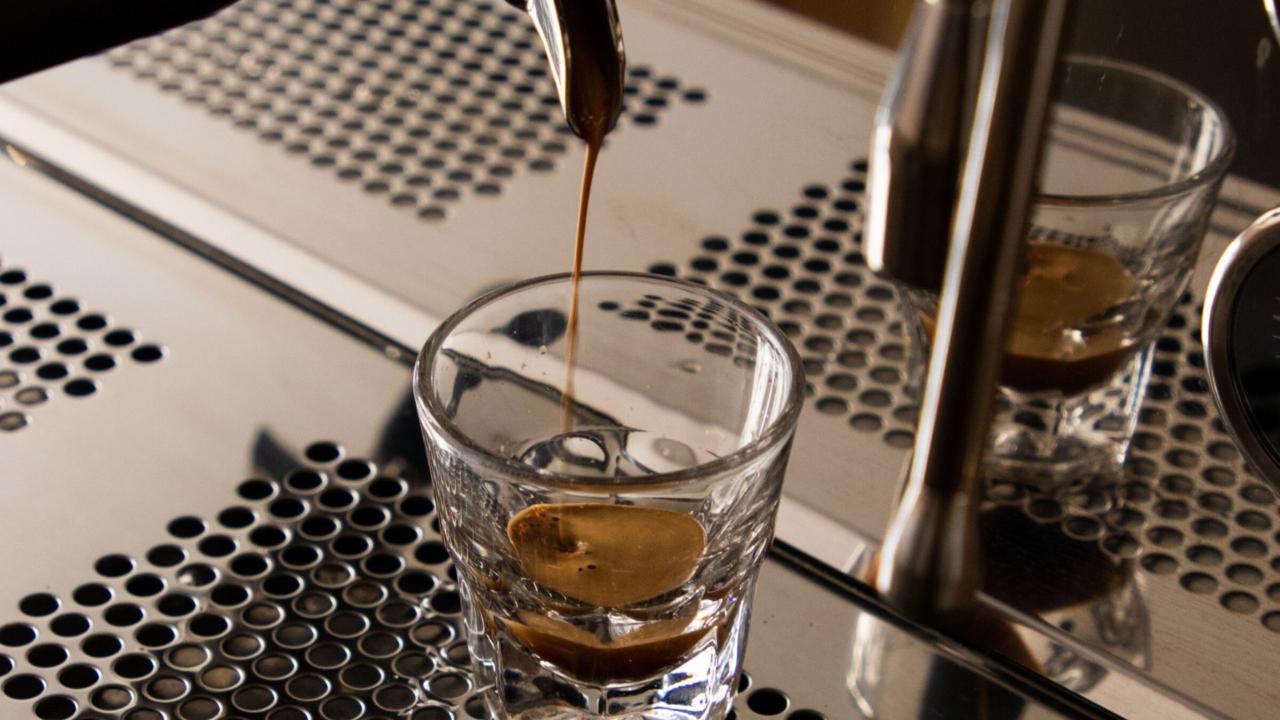
When explaining what makes a good espresso, the topic usually turns to the extraction time or the pressure the espresso machine produces. In all this we tend to forget to mention the quality of water used in preparing the perfect coffee.
Using quality water, rich in minerals and a minimum of filtration, is indispensable to a delicious espresso and prevents harmful limescale build-up in your machine.
Tap Water, or ‘Hard’ Water
Most experts agree that this is in fact your best choice, including our very own Jorge! Just don't use it straight from the tap. Filter it as little as possible, with a filtering pitcher (like a Brita). Each municipality has its own water supply but be sure to filter it at least once.
Many people say that the tap water in Montreal, with its famous minerals, improves the taste of coffee. This is especially true for pour-over coffees, i.e. coffee prepared in the portafilter (dripper). You should always moisten the filter before brewing, and the minerals are useful for creating the ideal morning coffee.
Now, bearing in mind that hard water gives coffee taste, you should know that the amount of minerals (mainly magnesium and calcium) will vary, depending on where you are and the season. This means that a coffee blend may taste different in the Saguenay or in Montreal, for example!
A study was conducted by an MIT chemist, Christopher H. Hendon, and he linked the key minerals in hard water to taste profiles in coffee. Read a summary of his findings here. If you want to get the most out of your beans without analyzing your water, buy as much local coffee as possible! At the very least, you'll know that your blend was tested and fine-tuned with basically the same water you use in your kitchen.

Bottled Water, or ‘Soft’ Water
There are three basic categories of bottled water: tap water that is simply plastic bottled water (avoid this), spring water, and distilled water. Spring water is similar to tap water in terms of minerals, while distilled water is almost completely purified of any salt or minerals.
Using distilled or finely filtered water is linked to another school of thought: that of the ‘purists’. While many assume that minerals are what give coffee its flavour, as mentioned above, there are those who only want to taste the flavours in the coffee itself. But on the other hand, according to the MIT chemist quoted above, distilled water actually deprives you of the full sensory experience of the drink!
Machine Maintenance
We shouldn’t need to remind you that maintaining your machine is absolutely crucial to its longevity! Regardless of the quality of water, it still contains minerals that can eventually damage your machine. The only part of maintenance that varies with water quality is the frequency. You have two options:
-
Use a water filter or water softener: these are designed to get the best water quality for your espresso machine. They keep the machine from clogging up with hard water, removing calcium and limescale, which can damage your machine over time.
-
Descaling the machine: simple, quick, and effective. Usually, all you need to do is put the descaling powder into the reservoir and run it through the machine like you’re making a few cups of coffee. Not every machine supports this though, so make sure you ask your retailer before trying anything.
The two solutions are not mutually exclusive: you can periodically descale your machine, even if you have a water filter in your reservoir.




Share:
Our Visit to HostMilano 2019
Visit ES Café Lauzon; the Ultimate Student Café