
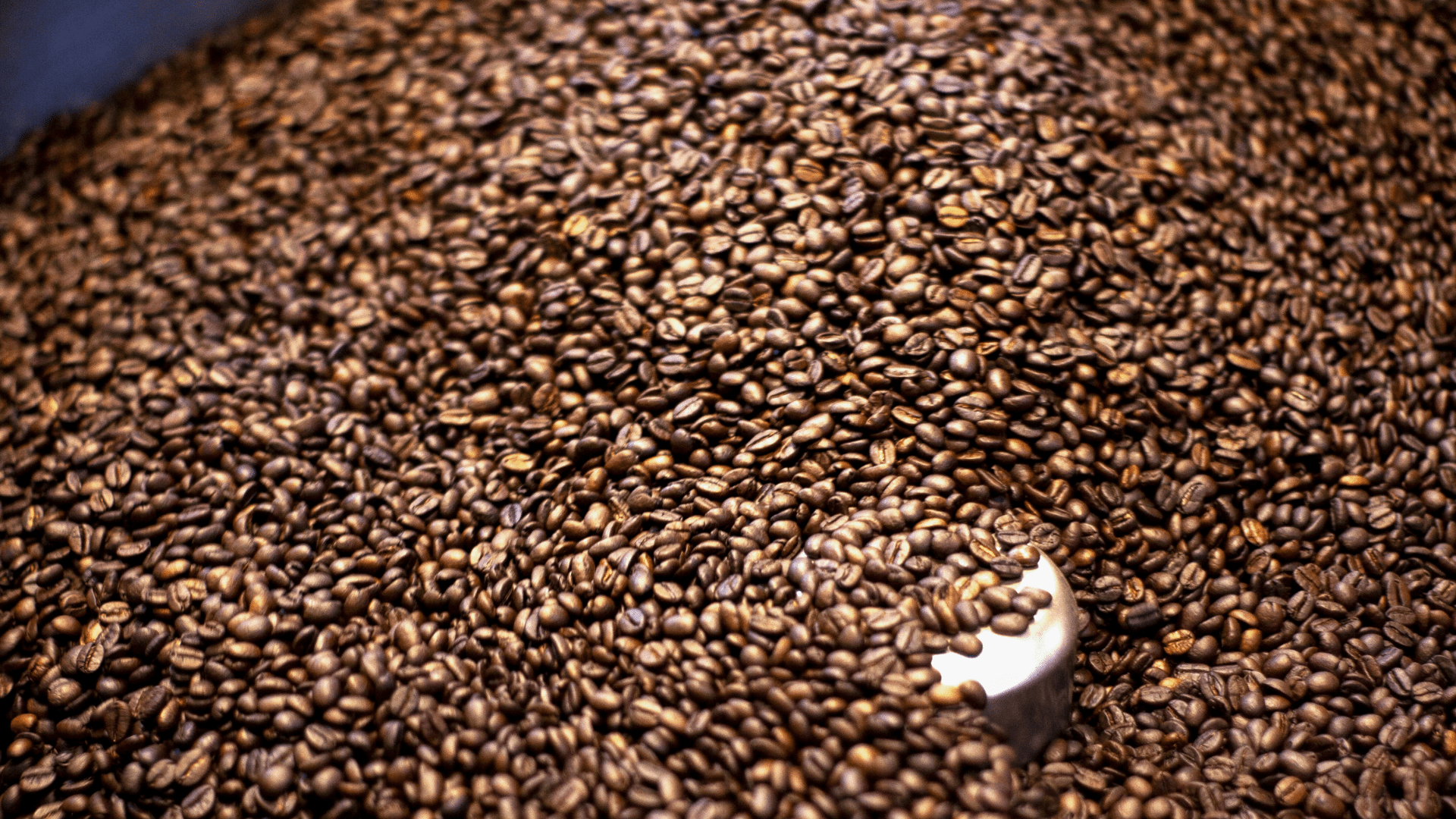
One of the questions that coffee experts probably hear the most is:
“What’s the difference between Arabica and Robusta?”
The two types of coffee plants are at opposite ends of the spectrum, and by blending the two together, we can achieve the best of both worlds.
Coffee Growing and Production Around the World
Coffee grows in regions near the equator, commonly referred to as the ‘bean belt’.
Coffee plants are most common in South America, with Brazil taking the prize for the world’s largest coffee producer.
However, coffee also grows in Central America, India, Indonesia, Africa, and Asia.

What is Arabica and Robusta?
These are the two different types of coffee plants that produce coffee beans.
Arabica and Robusta account for almost all of the world’s coffee production.
Arabica
Most of the coffee grown in the world is Arabica.
It is often referred to as the coffee plant that produces the best-quality beans, and here’s why:
Arabica is more expensive and more difficult to grow than Robusta because it can only grow in mountainous regions.
Compared with Robusta, Arabica has a lower level of acidity (which is subjective in terms of taste).
Arabica generally has an excellent flavour and aroma profile, hence the popular belief that Arabica is simply better than Robusta.
Be wary of fast-food chains offering “100% Arabica” coffee, as this doesn’t necessarily mean they’re using quality arabica beans.
As a general rule, coffee blends are made up of both Robusta and Arabica beans. However, they generally contain more Arabica, because they provide much of the blend’s delicate flavours and aromas.
Arabica and Robusta play an equally important role in coffee blends, especially in those designed for espresso.
Robusta
Robusta is a wilder, hardier coffee plant that grows easily on flat land. Here’s how it differs from Arabica:
It takes longer to ripen.
Its beans are smaller than Arabica beans, giving it a higher caffeine content.
It grows on a variety of soils that can be less rich.
This explains most of why the final product has a very different taste compared to Arabica.
Robusta may be less appealing at first glance, but it does have certain superior-quality plants, such as the Kaapi Royale (which can even grow in the shade).
It also plays a key role in coffee blends, especially traditional Italian blends. Here’s why:
It provides roundness and body, which are key features of a good espresso.
It produces the crema on your coffee.

A Flavour Profile for Every Producer
As with winemaking, every coffee farm has its own terroir that affects the flavour profile of its beans.
The flavour profile is determined by a number of factors such as weather, temperature, altitude, soil quality, and soil composition, and of course how the beans are processed after they are harvested.
Coffee is highly sensitive to the environment in which it is grown, and different tastes and bean qualities can be found within the same plantation. This is one of the reasons you can find excellent Robusta beans or mediocre Arabica beans, even when they are from a reputable farm.




Share:
Our caffeinated essentials for back-to-school survival
What beans are best for an automatic espresso machine?